Introduction
A thermostat is the control point for your heating and cooling system, so the installation bill depends on more than the device on the wall. Type, HVAC compatibility, existing wiring, labor, and whether you're replacing it in the same spot all affect the final cost.
Angi reports a $185 national average, with a typical range of $114 to $265. This guide separates device prices from installation costs, explains add-ons like C-wire work, and shows how to build a realistic budget.
Key Takeaways
- Installed costs run roughly $50 to $600 depending on basic, programmable, or smart models.
- Wiring, HVAC compatibility, labor, relocation, and access push quotes above the base price.
- Basic models suit simple systems; smart models pay off if you'll use scheduling, sensors, or remote access.
- The best choice balances price, safe installation, reliability, and long-term compatibility.
How Much Does Thermostat Installation Cost? (Pricing Overview)
There's no single price. The total combines the thermostat, labor, compatibility checks, wiring, setup, and any repair or relocation work.
Misreading that can hurt. You might underbudget for wiring, buy a device your system can't run, or miss diagnostic and follow-up charges.
Typical 2026 Installed Cost Ranges
These are published guide estimates, not contractor quotes. Don't add the two sources together as if they were an itemized bid.
| Category | Device only (Angi, 2026) | Installed estimate (Fixr, 2026) |
|---|---|---|
| Basic/manual | $20-$80 | $50-$150 |
| Programmable | $50-$150 | $100-$300 |
| Wi-Fi/smart | $100-$400 | $185-$600 |

Angi says professional installation includes setup, system testing, a demonstration, and removal of the old unit. Typical labor runs $50-$150 per hour or a $75-$250 flat fee.
Ranges generally exclude new cable runs, wall repairs, major electrical work, permits, taxes, and HVAC repairs.
Basic or Manual Thermostats
These are the cheapest option for compatible single-stage systems when you're swapping in the same location. They fit homeowners who want simple temperature control and don't need scheduling, apps, or remote sensors.
Programmable or Digital Thermostats
Scheduled temperature changes add convenience and can cut energy use when set up well. The Department of Energy says savings can reach as much as 10% a year when you turn the setting back 7 to 10 degrees F for 8 hours daily. That's conditional, not guaranteed.
Check whether the model supports your system's stages (single-stage or multi-stage) before buying.
Wi-Fi or Smart Thermostats
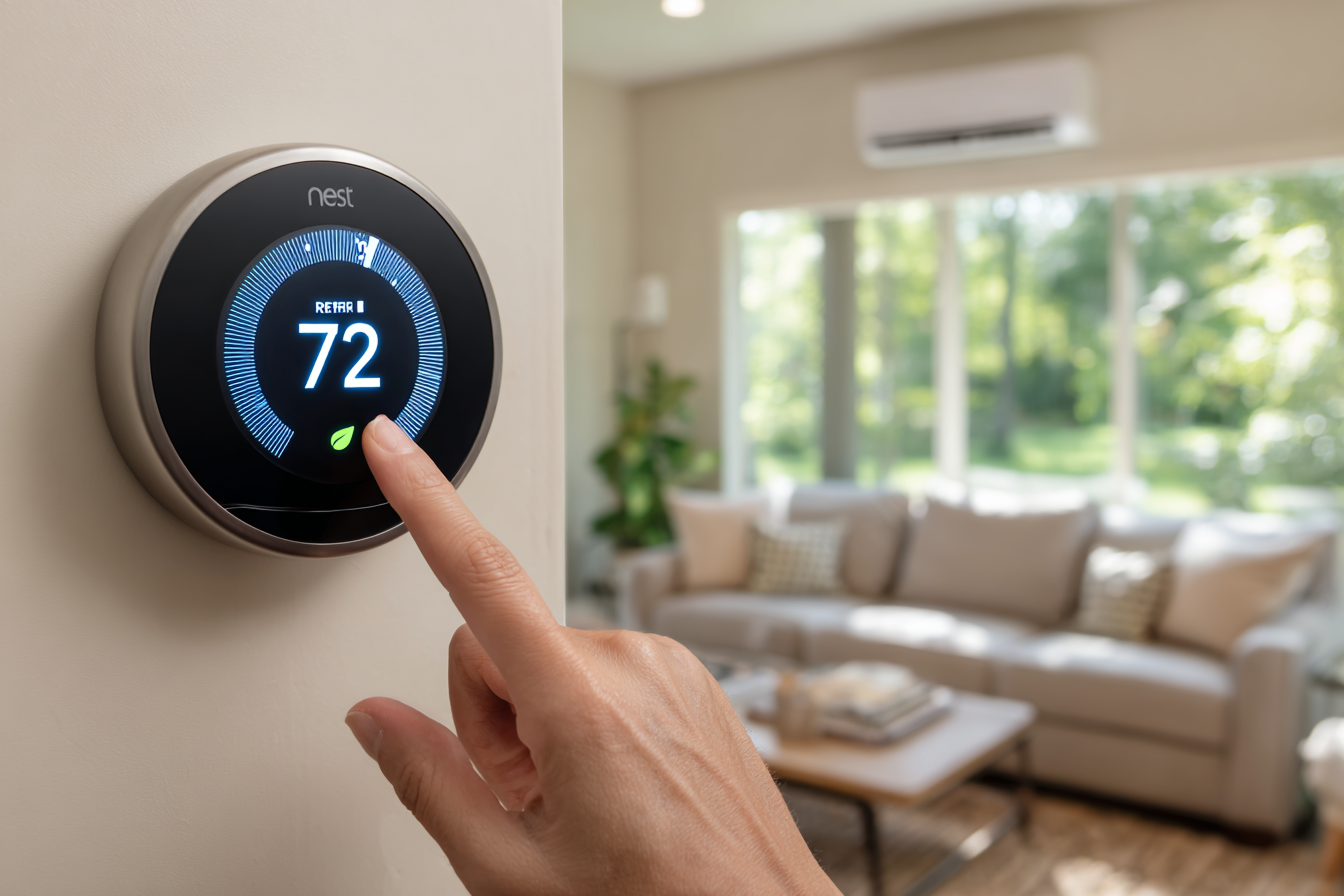
The higher price can cover app control, learning schedules, geofencing, voice assistants, energy reports, and room sensors. Retail examples include the ecobee Essential at $139.99 and the Nest Learning Thermostat (4th gen) at $279.99.
The installed total climbs if you need a C-wire, an adapter, new wiring, or professional configuration.
Key Factors That Affect the Cost of Thermostat Installation
Your quote reflects technical requirements, site conditions, labor, and features, not just the retail price.
Thermostat Type and Features
Displays, scheduling, sensors, learning functions, and smart-home compatibility drive device price. Advanced features only make sense if your routine and equipment can use them. A learning thermostat won't help much if your schedule never changes and you never open the app.
HVAC Compatibility and System Configuration
The thermostat must match your system's voltage, stages, heat-pump setup, auxiliary heat, zoning, and any proprietary communication protocol.
- Most smart models target standard 24V systems.
- ecobee supports conventional systems up to 2 heat/2 cool stages and heat pumps up to 4 heat stages.
- Line-voltage (120/240V) baseboard systems need a different control entirely.
- Proprietary or communicating systems may not work with third-party units.
A cheap thermostat becomes expensive if it needs extra controls or can't run your equipment properly.
Wiring and C-Wire Requirements
The C-wire is the common wire that supplies continuous power to many smart thermostats. Older or altered systems often don't have one available.
You have two main fixes:
- Power adapter: Google's Nest Power Connector is $24.99 and needs no new wire or drilling. ecobee's Power Extender Kit is sold separately, though it doesn't work with dual-transformer or heat-only systems.
- New wiring: Fixr estimates $90-$400 for running new thermostat wire. That estimate usually bundles labor and materials, so ask your installer for a line-item breakdown.

Labor, Access, and Installation Conditions
Labor depends on service-call policy, hourly versus flat rates, crowded wiring, attic or wall access, and time to test and configure. Most replacements take under an hour, but jobs needing new wiring can run up to 2 hours.
Relocating a thermostat adds wiring, patching, and painting. It can be worth it if the current spot sits near drafts, direct sun, or supply registers that skew readings.
Location, Timing, and Scope of Work
Labor rates vary by region, and busy seasons can limit appointments. Angi advises scheduling HVAC work before peak seasons, though it doesn't quantify a surcharge.
Permit and licensing rules depend on your jurisdiction and the work involved. There's no national thermostat permit rule. Confirm requirements with your installer or local building authority, and ask about disposal, diagnostics, warranty, and after-hours fees.
Cost Breakdown of Thermostat Installation
Total cost includes one-time installation expenses plus recurring and periodic ownership costs.
Initial Thermostat Purchase (One-time)
Device price depends on brand, included sensors, and warranty. ecobee Essential and Premium each carry a 3-year limited warranty, and ecobee lists 5 years for professionally installed units. Check whether batteries or a power adapter come in the box.
Installation and Setup (One-time)
Labor typically covers:
- Removing the old unit
- Connecting existing wires and mounting the new thermostat
- Configuring schedules or apps
- Calibrating and testing heating and cooling response
Operating Costs (Recurring)
- Batteries: Sensi uses 2 AA, the Nest Thermostat uses 2 AAA as backup, and the Nest Learning (4th gen) has a built-in rechargeable battery.
- Wi-Fi: Remote control needs working internet. ecobee core comfort features work without a subscription; video and some security alerts need a plan.
- Energy impact: ENERGY STAR cites average savings of about 8% of heating and cooling bills, roughly $50 a year. Results vary with climate, equipment, insulation, and habits.

Maintenance and Repairs (Recurring)
A technician may need to diagnose inaccurate readings, communication failures, short-cycling, or loose connections. Sometimes the HVAC equipment is the real culprit.
General diagnostic visits run roughly $75 to $250.
Upgrades and Replacements (Periodic)
Plan for possible extras over the life of the unit:
- C-wire work or added sensors
- Relocation or replacement after failure
- Compatibility changes after an HVAC upgrade
- Old-unit disposal
Low-Cost vs High-Cost Thermostats: What's the Difference?
A higher price doesn't guarantee better comfort. How well a thermostat fits your system and habits matters more.
Performance and Control
- Lower cost: Basic temperature control and limited scheduling. Often enough for a simple, compatible system.
- Higher cost: Remote access, automation, sensors, learning schedules, and integrations, if your system supports them.
Durability and Maintenance
- Lower cost: Fewer features means simpler operation and fewer connectivity problems. Verify warranty, display quality, and battery needs.
- Higher cost: Often better manufacturer support, software, and components, but with app, Wi-Fi, or subscription dependencies.
Warranty does not track price neatly. Google lists 2 years on its flagship Nest Learning Thermostat.
Long-Term Value
A basic replacement wins when existing wiring is adequate and you don't want smart features.
Advanced models can justify the cost if you will actually use remote adjustments, sensors, or energy tools. No one can promise a specific savings number.
How to Estimate the Right Budget for Thermostat Installation
Budget for system fit and total ownership cost, not the lowest sticker price.
Information to Gather Before Requesting a Quote
- Existing thermostat type and HVAC equipment type
- Number of heating and cooling stages, plus heat-pump or zoning details
- Whether your system is communicating or proprietary
- Whether the job is a direct swap, smart upgrade, relocation, or includes wall repair or diagnosis
Document terminal labels with a photo only after turning off power to the system. Ask the installer to confirm whether you need a C-wire, adapter, or new cable run.
Compare Quotes by Scope, Not Just Total
Ask each provider to itemize:
- Thermostat, labor, and old-unit removal
- Wiring, adapters, and accessories
- Calibration, testing in both modes, and taxes
- Warranty and follow-up support if the unit disconnects
If you're a homeowner in Yonkers or Westchester County, Quality Comfort Solutions provides licensed and insured HVAC service. That includes thermostat installation and calibration for smart and programmable models, with free, no-obligation estimates for installation projects.
What Most People Miss
- The cheapest device often isn't the cheapest total once labor, wiring, sensors, and diagnostics are added.
- A new thermostat won't fix poor placement, airflow problems, failing equipment, or short-cycling.
- Confirm compatibility, power needs, privacy and subscription preferences, and whether you'll use advanced features before buying a smart model.
Conclusion
Thermostat installation costs in 2026 vary with the device, HVAC compatibility, wiring, labor, access, location, and any extra setup or repair work. Expect roughly $50 to $600 installed, depending on category.
A realistic budget separates purchase price from installation, operating, maintenance, and future upgrade costs. The right thermostat matches your HVAC system safely and gives you useful control and dependable comfort at a fair long-term price.
Frequently Asked Questions
How much does it cost to install a thermostat?
Angi reports a $185 national average, with a typical range of $114 to $265. Wiring, compatibility, and relocation can push it higher; Fixr estimates $50 to $600 depending on type.
How much does it cost to install a smart thermostat?
Devices run about $100 to $400, with Fixr's installed estimate at $185 to $600. Labor, a C-wire adapter or new wiring ($90-$400), and configuration are extra.
How much do thermostats cost?
Per Angi, manual models run $20-$80, programmable $50-$150, and Wi-Fi or smart $100-$400. Installation is a separate cost.
Do you need an electrician to install a thermostat?
Not always. An HVAC technician often handles low-voltage thermostat work, while line-voltage or wiring modifications may call for an electrician. Licensing rules vary by state, so check locally.
How long does it take to replace an HVAC thermostat?
A same-location swap usually takes under an hour, and smart setup can take longer. New wiring can stretch it to about 2 hours; relocation or troubleshooting adds more.
How long do HVAC thermostats last?
Most last about 10 years, depending on quality, power source, and use. Warning signs include inaccurate readings, an unresponsive display, short-cycling, or repeated resets.