Drive link : https://drive.google.com/drive/folders/1GgNpp1UJpT9AjBiItN5gyohXGCYcScWu?usp=sharing
Proper HVAC duct installation influences how consistently air moves through a building, how comfortable each room feels, and how much energy the system uses over time. Many airflow issues, such as hot and cold spots, weak ventilation, and rising utility costs, often trace back to ductwork that was sized or installed incorrectly.
Homes with ducted air conditioning systems and commercial properties with larger heating and cooling demands both rely on ducts that are planned and fitted with accuracy. This guide breaks down the essentials for ensuring reliable airflow, stable temperatures, and long-term HVAC performance.
Quick Overview
Proper duct sizing and layout are critical for balanced airflow, consistent temperatures, and long-term HVAC efficiency.
Sealing, insulation, and material choice directly impact energy consumption, noise levels, and overall system performance.
Common installation mistakes, such as undersized ducts, poor sealing, and incorrect return placement, can reduce comfort and strain HVAC equipment.
Regular maintenance and seasonal tune-ups help detect airflow issues early, optimize system performance, and extend equipment life.
Professional installation and quality control ensure code compliance, precise measurements, and reliable operation, particularly for ducted AC systems and commercial setups.
What HVAC Duct Installation Involves
HVAC duct installation refers to the process of planning, sizing, assembling, and sealing the network of air pathways that move conditioned air through a building. This work sets the foundation for airflow strength, temperature consistency, and overall system performance.
Airflow Fundamentals
A duct system relies on two main airflow pathways:
Supply ducts: Carry heated or cooled air from the HVAC unit into each room.
Return air ducts: Pull indoor air back to the furnace, heat pump, or air handler so the system can recondition it.
Balanced airflow between these two sides reduces strain on equipment and helps avoid uneven temperatures.
Key Components in a Duct System
A complete setup usually includes:
Supply ducts to distribute conditioned air
Return air ductwork that draws air back to the system
Plenum, a main central chamber that directs air into multiple ducts
Registers and grilles to direct and control room-level air delivery
Dampers to regulate airflow inside specific duct sections
Each component must fit together with proper sealing to prevent air loss and maintain stable pressure.
Code Compliance
Duct installation must follow state and local building codes for safety, airflow capacity, insulation, and structural requirements. Westchester County and Yonkers have guidelines that confirm proper materials, routing, and installation practices.
For homeowners and businesses in Yonkers and Westchester, Quality Comfort Solutions verifies that all ductwork is installed to local code and HVAC design standards.
Types of Ductwork Materials
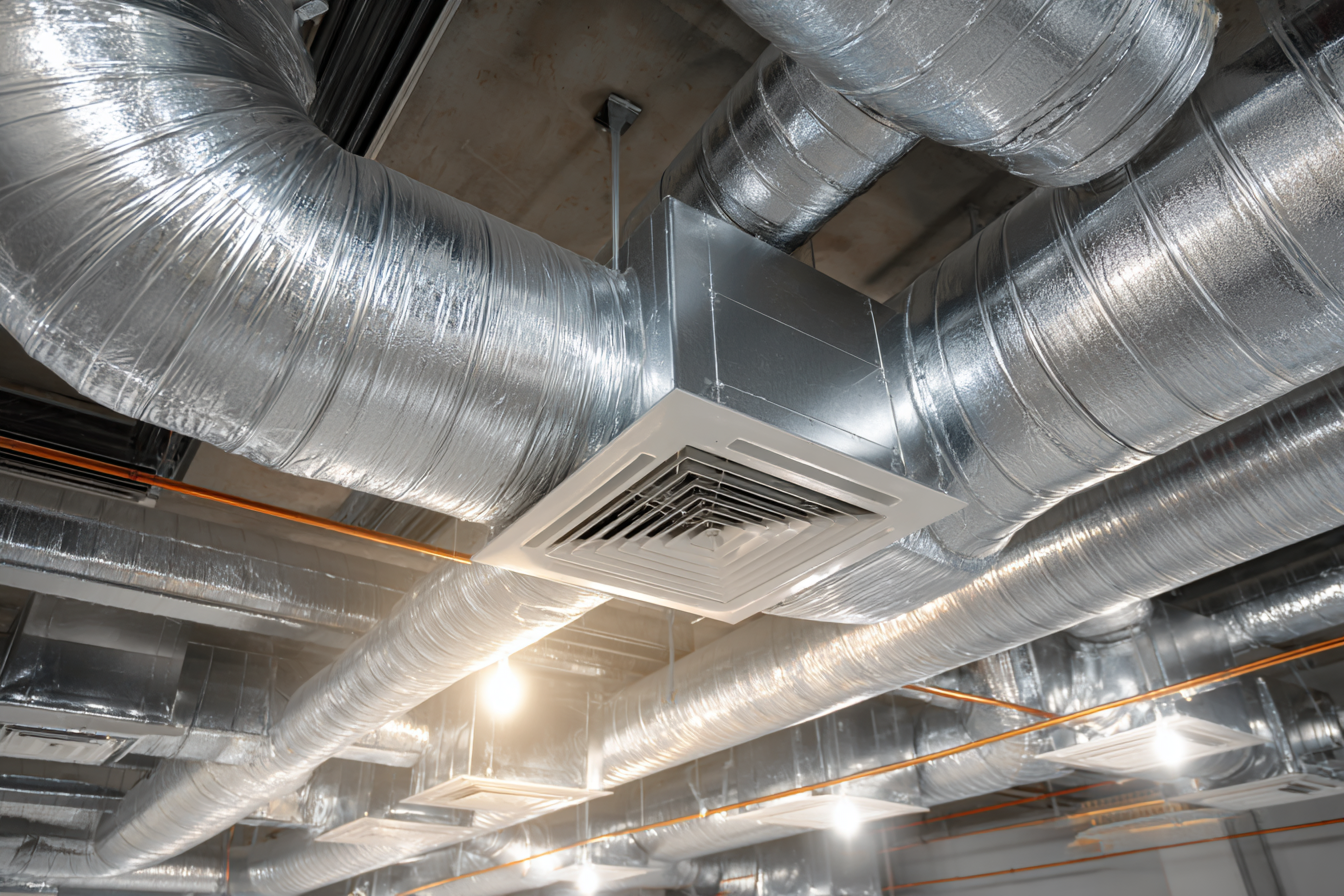
Selecting the right duct material influences airflow strength, noise levels, durability, and long-term maintenance. Each option supports different needs for homes using ducted air conditioning systems and commercial properties with larger airflow demands.
Sheet Metal Ducts
Sheet metal ducts are rigid and made from galvanized steel or aluminum. They hold their shape well, support steady airflow, and resist moisture-related issues when maintained correctly. The downside is the higher installation cost and the need for skilled labor to fit and seal them properly.
Best Use Cases:
Central air systems in homes
Commercial spaces needing durable, long-lasting ductwork
Flexible Ducts
Flexible ducts have a plastic inner core supported by wire and wrapped in insulation. They are simple to route through tight areas and cost-effective to install. Their flexibility, however, can lead to sagging or bends that restrict airflow if not supported correctly, and the interior surface is less smooth than metal.
Best Use Cases:
Short connections from trunk lines to registers
Attics and confined spaces
Fiberglass-Lined Ducts
These ducts are metal on the outside with internal fiberglass insulation. The lining helps control noise and maintain air temperature during longer runs. Over time, the insulation can deteriorate if not maintained, and cleaning requires care to avoid disturbing the fiberglass surface.
Best Use Cases:
Commercial systems needing noise reduction
Large HVAC units with higher airflow volume
Fabric Ducts
Fabric ducts are textile-based and usually installed in wide, open commercial areas. They distribute air evenly and are lightweight, which makes installation straightforward. They must be washed periodically, and they rarely fit the style or needs of residential properties.
Best Use Cases:
Warehouses
Gyms and sports facilities
Retail stores and open-plan commercial interiors
Which is the Best Match for Ducted Air Conditioning Systems?
For most homes, sheet metal ducts offer the best combination of durability, airflow quality, and long service life. Flexible ducts support short, targeted connections. In commercial environments, the choice may combine sheet metal with fiberglass-lined or fabric ducts, depending on layout and noise requirements.
Now that the material options are clear, the next step is understanding the guidelines that ensure those ducts perform as intended.
Key Guidelines for HVAC Duct Installation

Effective HVAC duct installation depends on accurate sizing, careful routing, and proper sealing. Each step affects airflow strength, comfort, and long-term system performance.
Proper sealing: Joints and connections must be sealed with mastic or UL-181–rated tape to prevent air leakage. Even small gaps weaken airflow, increase utility costs, and add strain to the HVAC unit.
Insulation requirements: Ducts running through attics, crawl spaces, or any unconditioned areas need insulation to reduce temperature loss and maintain steady supply air temperatures throughout the building.
Correct airflow balancing: Balanced supply and return airflow helps maintain consistent temperatures and prevents equipment strain. Dampers and register adjustments are used to fine-tune airflow where needed.
Proper routing: Ducts should follow a direct path with minimal turns. Sharp bends, long, flexible duct runs, and crushed sections restrict airflow and increase static pressure, reducing system output.
Duct sizing fundamentals: Sizing follows Manual D principles, focusing on airflow needs, room load, and duct material. Oversized ducts reduce air velocity, while undersized ducts limit airflow and increase noise.
Static pressure considerations: The system must stay within the static pressure limits that the HVAC equipment can handle. Higher-than-recommended pressure restricts airflow, reduces comfort, and shortens equipment lifespan.
To prevent airflow loss, noise issues, and pressure imbalance, Quality Comfort offers code-aligned duct installation for homes and businesses in Westchester County.
Essential HVAC Ductwork Design Considerations
Strong ductwork design supports balanced airflow, stable temperatures, and steady system performance. The process addresses load needs, duct placement, and airflow capacity for both residential and commercial properties.
Planning the duct layout: A layout is mapped to create clear pathways for air movement. The goal is to keep ducts direct, supported, and positioned so each room receives the airflow it needs.
Load calculations with Manual J: Manual J calculations determine how much heating or cooling each room requires. These values guide duct sizing and airflow distribution so every space receives the correct air volume.
Choosing supply and return placement: Supplies must be positioned to deliver air into the occupied area, while return ducts remove indoor air without causing pressure issues. Thoughtful placement limits uneven temperatures.
Avoiding long runs: Shorter duct runs reduce pressure loss and help the HVAC unit maintain steady airflow. Long or complicated paths often lead to reduced system output and higher strain.
Designing for commercial ductwork installation: Commercial spaces may need larger trunk lines, dedicated returns, or multiple zones. Ceiling height, equipment load, and building layout shape the final design.
Zoning considerations: Zoning uses dampers and separate thermostats to manage different areas of a building. This helps larger homes and commercial spaces maintain consistent comfort across separate sections.
Noise control: Noise levels can be reduced by using lined ducts in select areas, placing equipment away from quiet spaces, and sizing ducts correctly to prevent airflow turbulence.
Smart thermostat compatibility: Smart thermostats adjust airflow demand more precisely. Duct systems must support stable pressure and airflow so the thermostat can control temperatures accurately.
Common HVAC Duct Installation Mistakes and How to Fix Them

Many airflow and comfort issues begin at the installation stage. These problems often stay hidden until the system struggles, so understanding common mistakes helps prevent long-term performance losses.
Undersized ducts
Ducts that are too small restrict airflow, raise static pressure, and force the HVAC system to run longer than necessary. This often leads to noise, uneven temperatures, and reduced equipment lifespan. Undersizing is one of the most common causes of weak airflow across multiple rooms.
Fix: Size ducts according to room load and airflow needs using recognized sizing methods such as Manual D.
Poor sealing
Leaks at joints allow conditioned air to escape into attics, wall cavities, or crawl spaces. This reduces airflow at the registers and increases energy use, even when the HVAC equipment is functioning correctly. Poor sealing also leads to a pressure imbalance inside the system.
Fix: Seal all joints and connections with mastic or UL-181 tape and secure fittings before insulation is applied.
Too many bends
Repeated turns or crushed flexible ducts create airflow resistance inside the duct path. The HVAC system must work harder to push air through these restrictions, which lowers overall output. Over time, this can also increase wear on the blower motor.
Fix: Use direct routes whenever possible, add gradual turns instead of sharp ones, and replace sagging or compressed flex ducts.
Incorrect return air placement
Returns placed in the wrong location create a pressure imbalance, which often leads to drafts, temperature swings, and poor circulation. If a return is too close to a supply vent, it can pull air before it reaches the room. This results in poor comfort and wasted energy.
Fix: Position returns in open areas where air can move freely back to the system without blockage or short-cycling.
No insulation
Uninsulated ducts lose heat or cooling rapidly when routed through attics, basements, or crawl spaces. This causes supply air temperatures to drop or rise before reaching the living or working spaces. The system must run longer to compensate for this loss.
Fix: Add insulation to ducts in unconditioned areas to maintain a stable temperature through each run.
Mixing incompatible duct materials
Different materials expand, contract, and seal differently, which can loosen connections over time. This leads to air leaks, noise, and inconsistent airflow delivery. In some cases, the mismatch also reduces the durability of the entire section.
Fix: Use compatible materials throughout the system and follow manufacturer guidelines for transitions and fittings.
Even with careful planning, some parts of duct installation require professional handling to ensure accuracy and code compliance.
When to Call a Professional for HVAC Duct Installation
Installing ductwork requires precision, proper materials, and adherence to local codes. While some homeowners may consider DIY projects, there are key reasons to involve a licensed professional.
When DIY is unsafe or not allowed: Working with duct systems involves handling large equipment, cutting and sealing metal or flex ducts, and ensuring safe airflow. Mistakes can cause leaks, pressure imbalance, or even damage to HVAC units.
Ensuring compliance: Local codes in Yonkers and Westchester require specific duct materials, insulation, and installation practices. Professionals ensure every system meets these standards, reducing the risk of costly corrections or failed inspections.
Benefits of professional measurements, sealing, and installation: Licensed installers perform accurate load calculations, measure duct runs, and seal all connections to maintain proper airflow. Quality control checks during installation prevent energy loss, uneven temperatures, and long-term performance issues.
Importance for ducted AC systems and commercial spaces: Ducted air conditioning systems and commercial installations often involve larger loads and complex layouts. Professionals ensure that supply and return placement, zoning, and pressure balance are optimized, protecting both comfort and equipment lifespan.
If you’re planning new ductwork installation or need expert evaluation, Quality Comfort Solutions provides licensed HVAC services in Yonkers and Westchester County, NY. Our team handles duct design, installation, maintenance, and system optimization for both heating and cooling equipment, ensuring accurate installation and reliable airflow throughout your property.
Conclusion
Well-designed and properly installed ductwork is essential for consistent airflow, energy efficiency, and overall comfort. Even minor installation or maintenance mistakes can cause uneven temperatures, higher utility costs, and extra strain on HVAC equipment.
Professional expertise ensures that each duct, return, and connection meets local codes, adheres to best practices, and performs reliably year-round. If you’re a homeowner or business in Yonkers and Westchester County, Quality Comfort Solutions provides licensed duct design, installation, and maintenance services that optimize system performance and extend equipment life.
Schedule a consultation today to ensure your ductwork and HVAC system operate efficiently and deliver reliable comfort throughout your space.
FAQs
1. How long does a typical duct installation take?
The duration depends on the size of the property and the complexity of the duct layout. A standard residential installation can take one to three days, while larger commercial projects may take several weeks due to additional planning, zoning, and equipment integration.
2. Can existing ductwork be reused when upgrading HVAC equipment?
In some cases, ductwork can be reused if it is properly sized, sealed, and free from damage. A professional evaluation is necessary to ensure it meets airflow requirements and supports the new system’s efficiency.
3. What materials are best for reducing indoor noise from ductwork?
Fiberglass-lined ducts or properly insulated sheet metal ducts help minimize vibration and airflow noise. Strategic placement of ducts and using gradual bends also contributes to quieter operation.
4. Are there signs that indicate duct cleaning or inspection is needed?
Persistent dust in vents, unusual odors, or decreased airflow can signal the need for inspection. While ducts don’t always require frequent cleaning, periodic checks help maintain efficiency and indoor air quality.
5. How does duct layout affect energy bills?
An efficient duct layout reduces airflow resistance, prevents leaks, and maintains balanced temperatures across all rooms. Poorly designed ducts force the HVAC system to work harder, directly increasing energy consumption.