You’ve probably heard about boiler breakdowns dominating winter headlines, from families waking up to a cold house to emergency repair crews scrambling during cold snaps.
And it’s not just an annoyance: research shows that about 75% of homeowners with older heating systems are completely unprepared for a sudden boiler failure. This is often with no plan or budget set aside for what comes next.
If you live in Yonkers or Westchester County, those harsh Northeast winters make your boiler the heart of your home, and when it falters, life stops.
You already know how frustrating it is to watch your energy bills climb while your boiler sputters, clanks, or won’t kick on at all. However, most “how-to” advice either talks past you or assumes you already know the basics.
This guide explains why boilers fail, what you can safely troubleshoot, and when it’s best to bring in a professional, with practical steps for homeowners.
At a Glance
Preparedness matters: About 75% of homeowners with older systems are not ready for a sudden boiler failure, which makes planning and early detection essential.
Safety first: Boilers involve gas, electricity, and pressurized water, and over 100,000 CO-related ER visits each year highlight why DIY must stay within safe limits.
Smart DIY checks: Thermostat settings, power verification, single resets, pressure readings, and condensate pipe observations offer safe clues without opening the system.
Repair or replace clarity: Repairs work best for isolated faults, while frequent failures, obsolete parts, or a boiler age of 12–15 years often point toward replacement.
Professional support: Licensed diagnostics, safe repairs, and tailored system care from Quality Comfort Solutions provide dependable long-term heating performance for Westchester County homes.
What Repairing A Boiler Really Involves

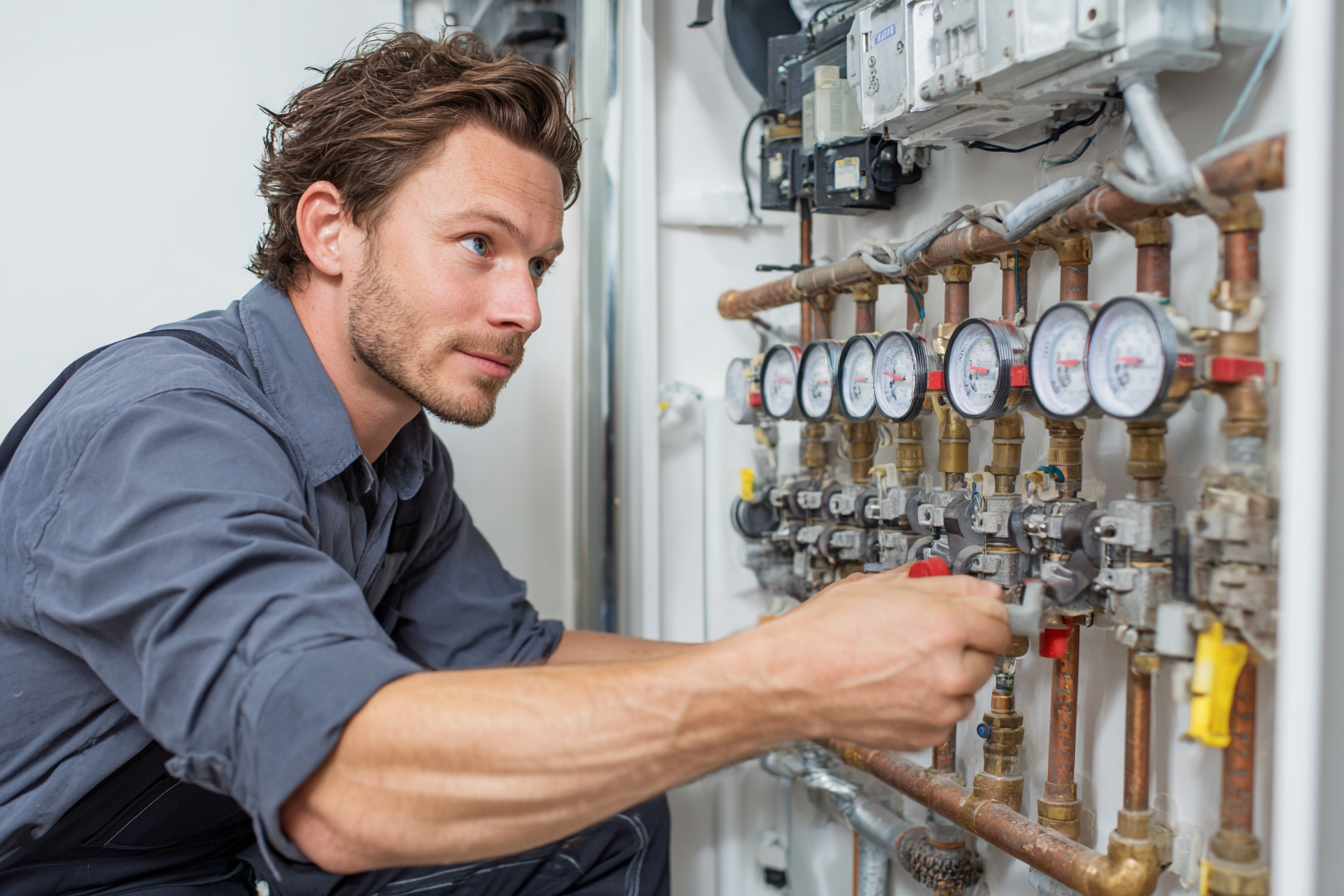
A professional boiler repair goes well beyond a simple reset. Technicians perform a sequence of safety, diagnostic, mechanical, and compliance tasks. Expect clear steps, documented findings, and a final system test.
Here’s what a pro will typically do during a repair.
Initial Visual Inspection. Check the boiler body, pipes, and visible fittings for corrosion or leaks.
Isolation And Safety Checks. Shut off gas and power where needed. Verify safety devices before work begins.
Combustion And Venting Tests. Inspect burner operation and flue ventilation for safe combustion.
Controls And Sensor Verification. Test thermostats, pressure switches, flame sensors, and limit controls.
Pressure And Water System Work. Check gauges, refill or repressurize system as required. Inspect expansion tanks.
Circulator Pump And Valve Service. Test and, if needed, lubricate or replace pumps and zone valves.
Heat Exchanger Inspection. Look for cracks, scale, or blockages that reduce performance or cause leaks.
Condensate And Drain Checks. Clear condensate lines and traps. Test condensate pumps where present.
Gas Line And Electrical Safety. Verify gas pressures, connections, and wiring integrity.
Parts Diagnosis And Replacement. Faulty ignitors, valves, gaskets, or sensors are identified and swapped.
System Tuning And Efficiency Calibration. Adjust burner settings and controls for safe and efficient operation.
Leak And Carbon Monoxide Checks. Confirm no hazardous leaks remain after repair.
Final Operational Test. Run the boiler through cycles. Confirm heat delivery and stable operation.
Documentation, Estimates, And Warranties. Provide a written report, parts receipts, and warranty details.
Typical repair time ranges from one hour for simple fixes to a day or more for major component replacements. Cost factors depend on parts, labor, and system complexity.
If there are local permits or code requirements, the technician will note them and arrange compliance paperwork.
Understanding the repair process sets the stage for safer decisions. Before touching any part of the system, you should review a few basic safety steps.
Safety Tips Before Repairing A Boiler At Home
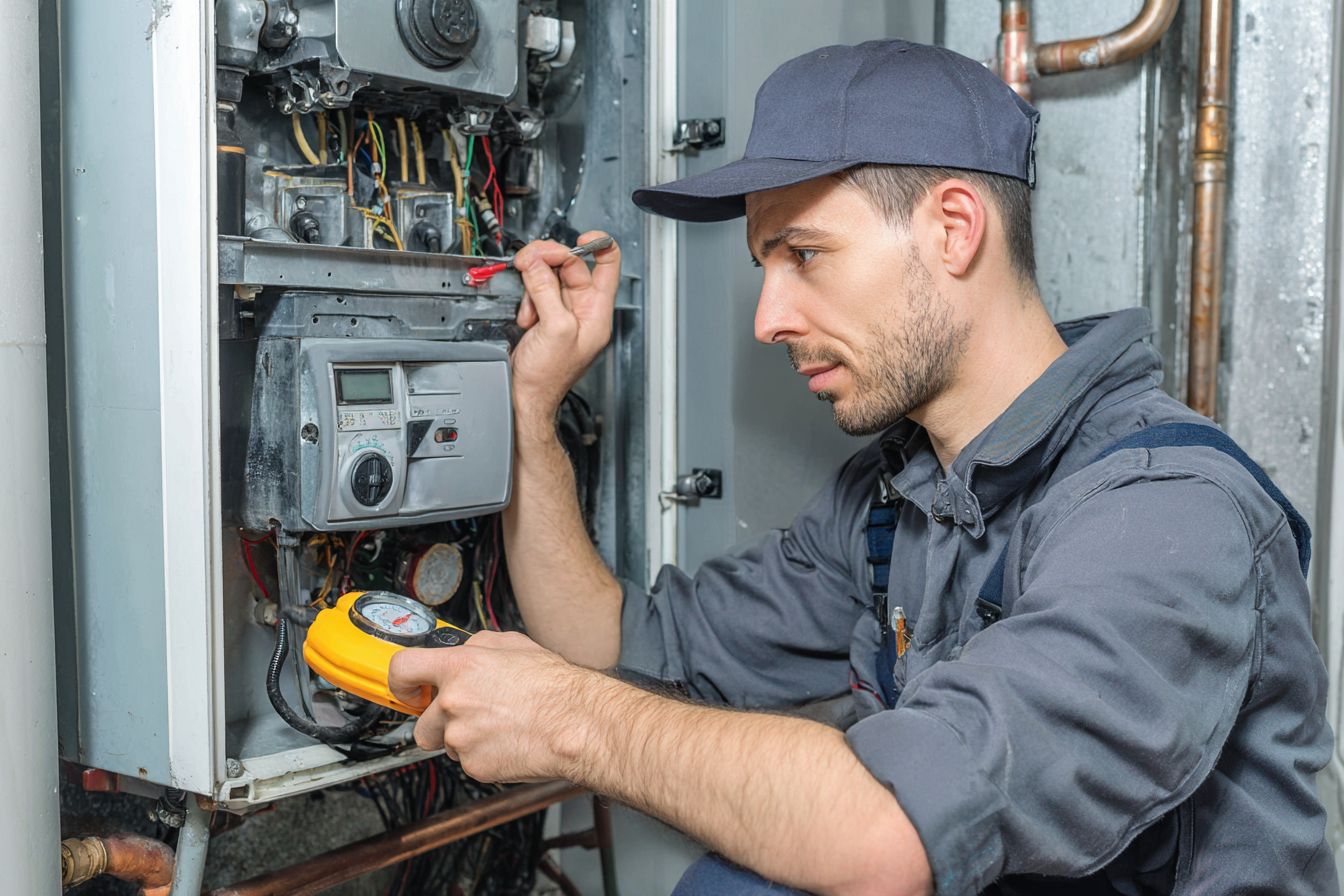
Boiler work can be hazardous. Risks include carbon monoxide, gas leaks, scalding, electrical shock, and pressurized water. Treat any repair as a safety task first. Follow local code and manufacturer limits. If a required safety check or isolation step cannot be done, stop and call a licensed technician.
Start with these practical safety steps homeowners can perform before attempting simple troubleshooting.
Know Where To Shut Off
Locate and label the boiler’s gas valve, power switch, and water shutoff. Turn off the power before touching the wiring.Check Carbon Monoxide Alarms
Ensure working CO detectors are on every level and outside sleeping areas. Test alarms before any work.Smell For Gas And Act Fast
If gas is smelled, do not operate switches or appliances. Ventilate, leave the home, and call the gas company or emergency services. Do not attempt repairs.Isolate Power And Fuel
Switch off electrical power at the breaker and close the gas valve when a job requires component access. Lock or tag the breaker if possible.Protect Against Hot Water And Steam
Let the boiler cool. Release pressure only using manufacturer-approved valves. Use gloves and eye protection for any bleeding or draining.Watch For Leaks And Corrosion
Visible rust, wet spots, or active leaks mean do not proceed. Small drips may be noted, but active leaks require shutting down and calling a pro.Avoid Gas Or Combustion Work
Do not attempt burner, gas train, or combustion adjustments. Those require certified technicians and combustion testing equipment.Clear The Area
Keep children and pets away. Remove stored items and combustible materials from the boiler space. Maintain clear ventilation paths.Document And Photograph
Take photos before disassembly. Note settings and wiring layouts. This speeds a professional repair if escalation is needed.Know When To Stop
If the issue involves gas pressure, heat exchanger cracks, persistent CO alarm triggers, electrical faults, or unknown noises, shut the system down and contact a licensed service.
With the safety basics covered, you can move on to a few simple checks that help identify common issues.
DIY Quick Checks Before the Repair
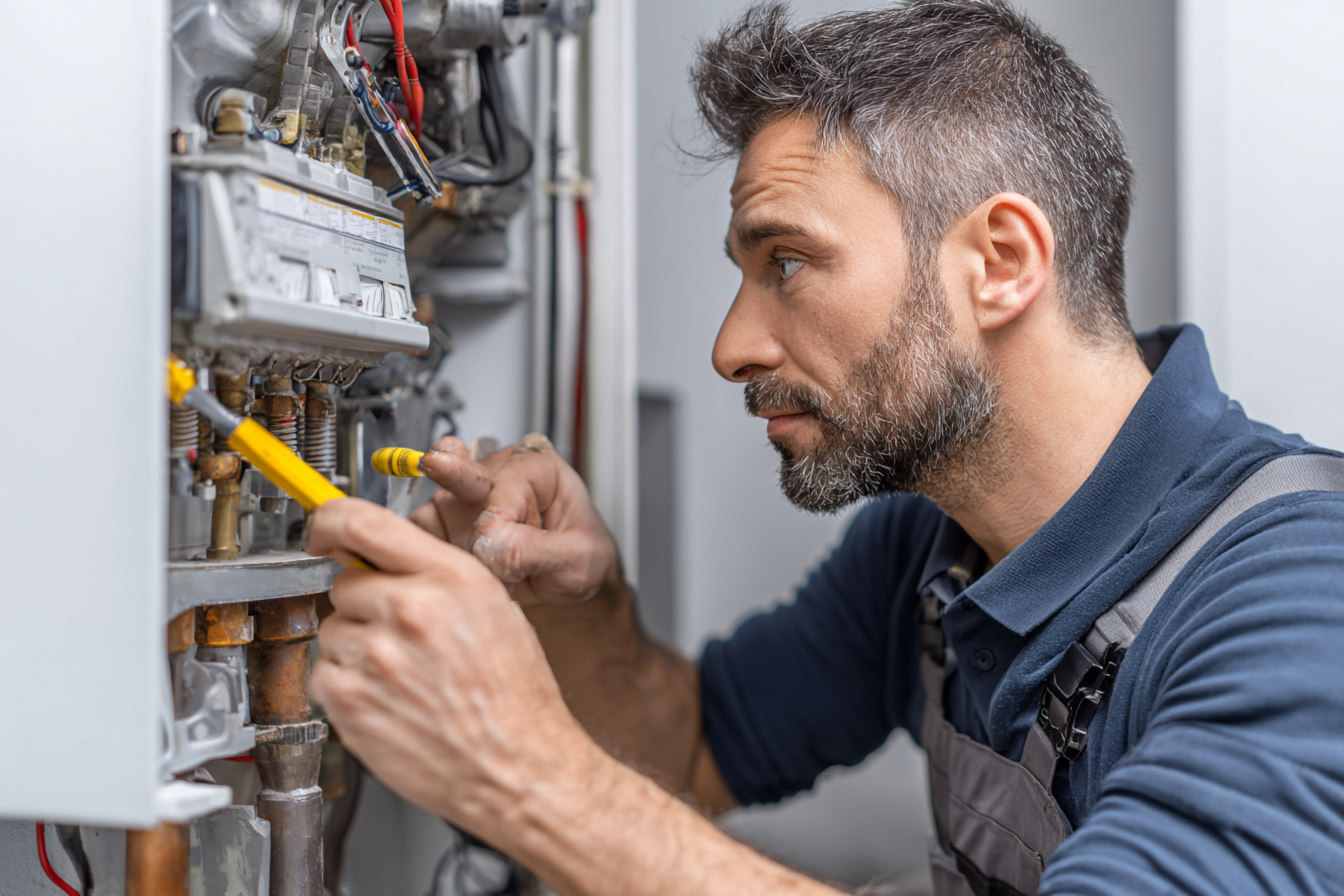
Before you book a technician, you can gather a lot of helpful clues on your own. These checks stay on the safe side of the system and help you understand what the boiler is trying to tell you. None of them requires tools or opening sealed panels. Think of this as a quick scan that gives you a clearer picture of what’s happening.
Here are the checks worth doing.
Look at your thermostat with fresh eyes
Make sure it’s actually calling for heat. Try nudging the temperature up a few degrees. If the display flickers or looks dim, swap the batteries so you’re not chasing a false fault.Make sure the boiler is getting power
A tripped breaker or an off switch can mimic a serious breakdown. Check your panel and reset the breaker only once. If it trips again, stop there.Read the boiler’s display like a hint book
Modern boilers show error codes or flashing lights that point to specific issues. Note anything you see. It saves time later.Check the pressure gauge, not the pipes
Look for pressure that’s noticeably low or unusually high while the system is cold. Don’t add water unless your model’s manual allows it.Try one reset, not a series of them
A single reset can clear a minor lockout. Repeated resets can make a real problem worse, so avoid temptation.Open your radiator valves fully
Sometimes the issue isn’t the boiler at all. Closed valves can trick you into thinking the system isn’t heating.Step outside and check the condensate pipe
In freezing weather, a frozen or blocked pipe can shut the system down. Note any ice or buildup, but avoid force-thawing.Listen for patterns, not just noise
Short cycling, clicking, or silence when heat is requested can all point to different issues. Observing the pattern gives a technician a head start.
After these simple checks, your part ends. Anything deeper moves into territory that can damage the system or put you at risk.
Why Homeowners Shouldn’t Go Beyond Basic Boiler Checks
Boilers are tied to two silent hazards: gas combustion and electrical controls. Each year in the U.S., unintentional, non-fire carbon-monoxide exposures cause over 100,000 emergency-department visits and about 400 deaths. That risk is a key reason deeper boiler work must be left to trained, equipped technicians.
Below is a specific, technical table that explains exactly what not to touch, the measurable or procedural reason why, and the real-world consequence if it’s done wrong.
DIY Line You Shouldn’t Cross | The Actual Technical Reason | What Could Go Wrong |
|---|---|---|
Opening the combustion chamber | The chamber is sealed to maintain a controlled air–fuel ratio. Breaking that seal changes combustion stability. | CO entering your home; unsafe flame behavior. |
Adjusting gas valves or pressure | Gas pressure must be set using a manometer to exact in. W.C. specifications. | Over-firing, gas leaks, cracked heat exchanger. |
Replacing igniters or flame sensors | These require exact spacing and alignment measured in millimeters. | Misfires, delayed ignition, lockouts. |
Draining or bleeding without checking the expansion tank | Tank pre-charge must match cold system pressure (often ~12 psi). | Ruptured tank, circulation failure. |
Multiple forced resets | Resets override safety lockouts designed to stop a dangerous condition. | Heat exchanger damage or ignition failure. |
Thawing condensate pipes with boiling water | PVC/ABS condensate lines can’t handle abrupt thermal shock. | Cracks, flooding, pump failure. |
Loosening or modifying the flue | Flue slope, gaskets, and sealed joints are required for safe draft. | Silent CO backflow into living areas. |
Swapping circulator pumps | Pump selection depends on system GPM and head; wrong specs disrupt circulation. | Overheating, short cycling, pump burnout. |
Touching internal wiring or control boards | Boards mix low-voltage signals with ignition and gas-valve controls. | Short circuits, unsafe firing signals. |
After identifying what requires a professional, the next step is deciding if a repair is the right investment or if a new boiler is the smarter choice.
Repairing a Boiler vs Replacing It
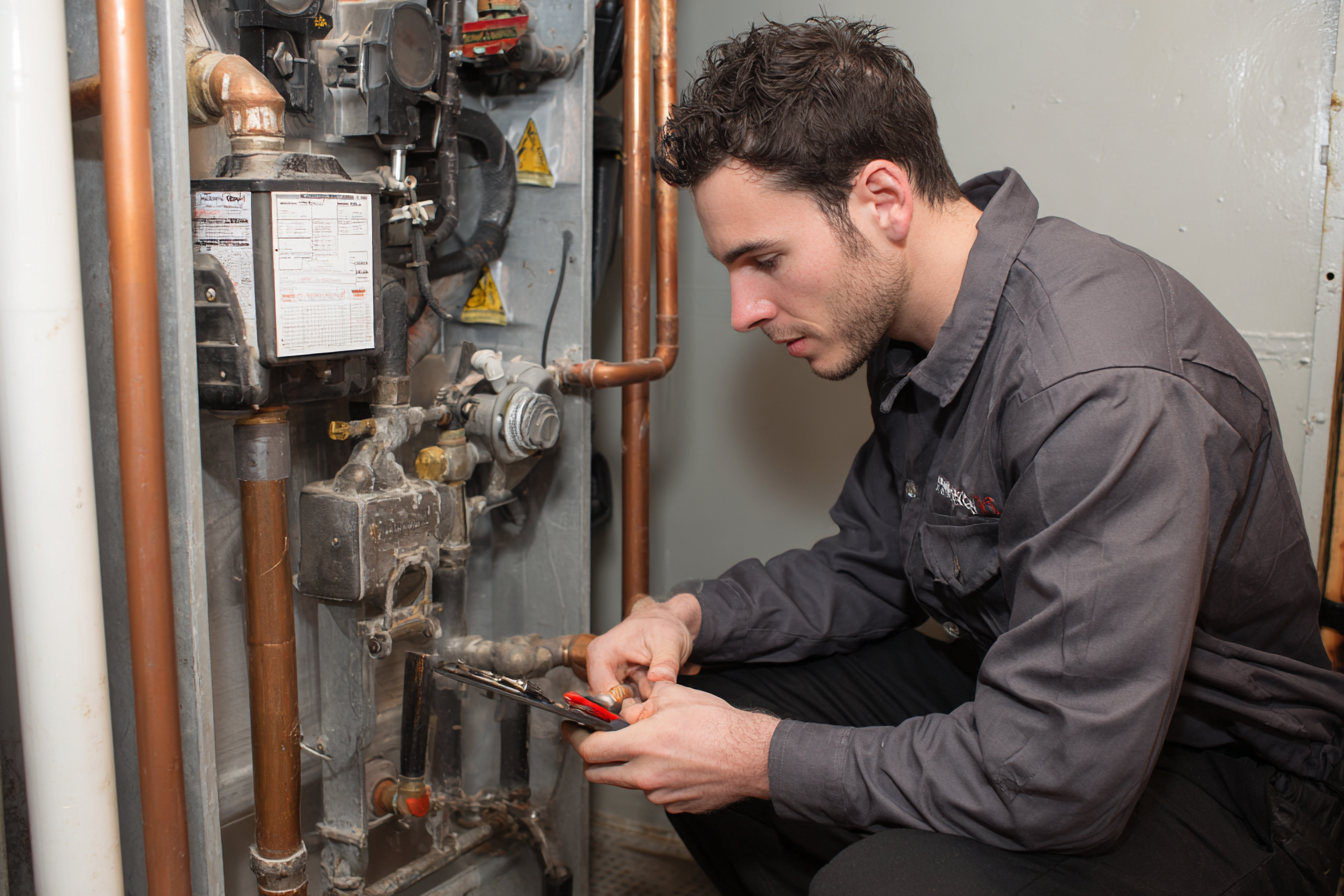
Deciding between repairing and replacing a boiler often comes down to timing, cost pressure, and how much life the system realistically has left. Homeowners who understand the difference early avoid paying for repairs that won’t hold or replacing equipment long before it’s necessary.
This section lays out the exact indicators that matter, so significant funds aren’t spent in the wrong places.
Repairing A Boiler
Repairing makes sense when the boiler is fundamentally sound. Typical triggers for repair: isolated failed parts, recent service history, and acceptable efficiency for the home. Repairs are faster and usually cost much less than replacement.
Here are the key things to look for and the questions to ask during a repair decision.
Get a written diagnosis: It helps you see exactly what failed and why the repair is recommended.
Request an itemized quote: This shows labor, parts, and any added fees upfront.
Ask about the failed part’s life expectancy and warranty: This tells you how long the repair is likely to hold.
Check if the part is still manufactured: Obsolete or discontinued parts often make replacement a smarter choice.
Compare the repair estimate to the cost of a new system: If the repair is more than 50% of replacement, upgrading is usually advised.
Confirm that the technician tests combustion, pressure, and controls after the repair: Proper post-repair testing protects performance and safety.
Consider the long-term value: If the repair restores stable heat and efficiency for several years, it’s a practical short-term solution.
Monitor your annual fuel use: If energy consumption remains high even after repairs, a replacement may deliver better savings.
Replacing A Boiler
Replacement suits boilers that are old, inefficient, frequently failing, or incompatible with modern controls or fuel-switching plans. Replacing can lower bills, reduce breakdown risk, and enable cleaner heating options such as high-efficiency units or heat pumps.
Before committing to a new system, review these factors so you can make a well-informed decision.
Boiler age: Units older than 12–15 years are often near the end of efficient performance and become strong candidates for replacement.
Frequent callouts: Three or more repairs in a single season usually signal declining reliability and make replacement the more practical choice.
Efficiency gains: Compare AFUE or efficiency ratings to understand how much fuel a modern boiler could save you.
Future-proofing: Consider systems that support lower-carbon heating or pair with heat pumps; NYSERDA incentives can reduce upfront costs.
Total cost view: Include removal, disposal, updated controls or piping, permits, and potential rebates when comparing repair and replacement.
Payback estimate: Ask installers for projected fuel savings and payback period so you can judge long-term value.
Rebate check: Confirm available NYSERDA or local incentive programs, as rebates can shift the decision toward upgrading.
When you’re ready to move forward, the next question is simple: who can fix the issue the right way?
Quality Comfort Solutions Resolves Boiler Troubles
When a boiler breaks down, especially in winter, it isn’t just an inconvenience. Cold radiators, rising stress, and the discomfort of a chilly home are real pain points for homeowners.
Older systems or unexpected failures can leave you scrambling for reliable help in Yonkers and Westchester County. That’s where Quality Comfort Solutions steps in with focused, experienced support. With over 25 years of experience, we deliver a practical, reliable path from boiler trouble to comfort.
Here’s how boiler problems are addressed with professional care:
Licensed Professionals On Every Job: Technicians are fully certified and insured, bringing deep HVAC knowledge to every boiler service call.
Comprehensive Boiler Services: They handle repair, maintenance, and installation of boilers; not just quick fixes.
Prompt and Dependable Response: Fast service minimizes cold days and discomfort, whether planned maintenance or urgent repair is needed.
Seasonal Tune-Ups: Quality Comfort Solutions offers preventive maintenance to keep systems running efficiently and reduce the likelihood of breakdowns.
Customized Solutions: Boilers are serviced or installed based on your home’s layout, efficiency goals, and comfort needs; not a one-size-fits-all approach.
Transparent Estimates: You receive a free, no-obligation estimate before work begins, helping you plan your budget with clear expectations.
Residential and Light Commercial Coverage: Whether it’s your home or a small business boiler system, their team has you covered.
Conclusion
A well-functioning boiler is both a comfort essential and a safety priority, so decisions about repairs or upgrades should always be guided by clear information and practical judgment. Taking time to understand early warning signs, cost expectations, and long-term implications helps prevent unexpected downtime and unnecessary expenses.
For those in Yonkers and Westchester County, reliable boiler support is crucial during long heating seasons. Extensive licensing, seasoned technical expertise, and a full range of boiler-focused services position Quality Comfort Solutions as a dependable resource for accurate diagnostics, safe repair work, and system improvements built around long-term comfort.
To schedule service, request an estimate, or discuss the best approach for your heating system, contact us. Professional guidance is available to help restore warmth and stability as quickly and safely as possible.
FAQs
1. How do I know if my boiler needs a repair or a full replacement?
Frequent breakdowns, high fuel use, unusual noises, or a boiler age of 12–15+ years often indicate that replacement may be more cost-effective. A technician’s diagnostic assessment can confirm which path makes sense.
2. Is it safe to keep using my boiler if it’s making strange noises?
No. Knocking, whistling, or grinding sounds can signal pressure issues, pump problems, or failing components. Continuing to run the system can create safety risks or cause more damage.
3. How long does a typical boiler repair take?
Most repairs take one to three hours. More complex issues, like pump replacements, blocked heat exchangers, or electrical faults, can take longer depending on parts availability.
4. Why is my boiler losing pressure so often?
Common causes include leaks, a failing expansion tank, air in the system, or a malfunctioning pressure relief valve. Repressurizing the system without addressing the root cause won’t solve the problem.
5. Can I prevent boiler breakdowns during the winter?
Yes. Annual maintenance, proper system cleaning, working CO alarms, and clearing the condensate pipe area can greatly reduce winter failures. Regular inspections help catch small issues before they lead to bigger problems.